✓
Longitudinal and transverse cracks
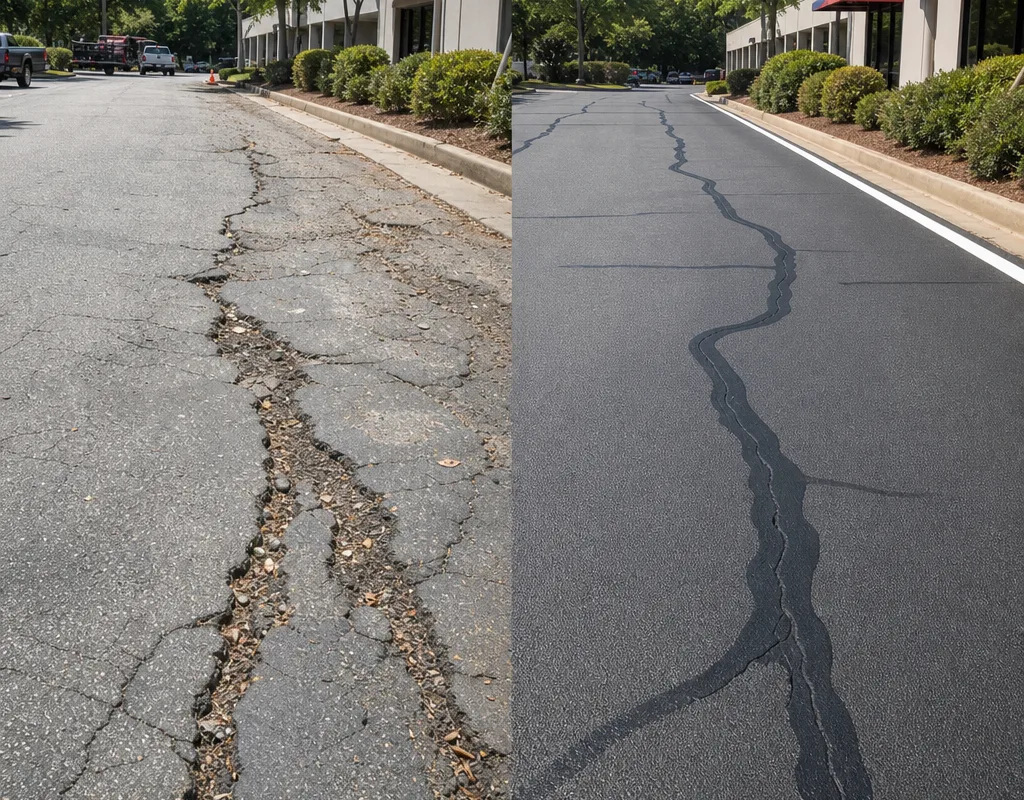
Straight cracks that run with or across traffic lanes. These are common in lots and drive aisles and respond well to proper crack filling and sealing when edges are still intact.
Serving Atlanta, Georgia & surrounding areas
Mon–Fri 8am–6pm · Sat 9am–2pm
Stop cracks from spreading, leaking, and turning into potholes. We repair and seal asphalt cracks on parking lots and driveways with materials and prep that hold up to Atlanta heat, storms, and traffic.
Asphalt cracks rarely stay small. Water gets into the opening, softens the base, and pumping traffic pushes the edges apart. In Atlanta, that cycle speeds up because summer heat makes asphalt more flexible during the day, then heavy rain events drive water into every weak spot.
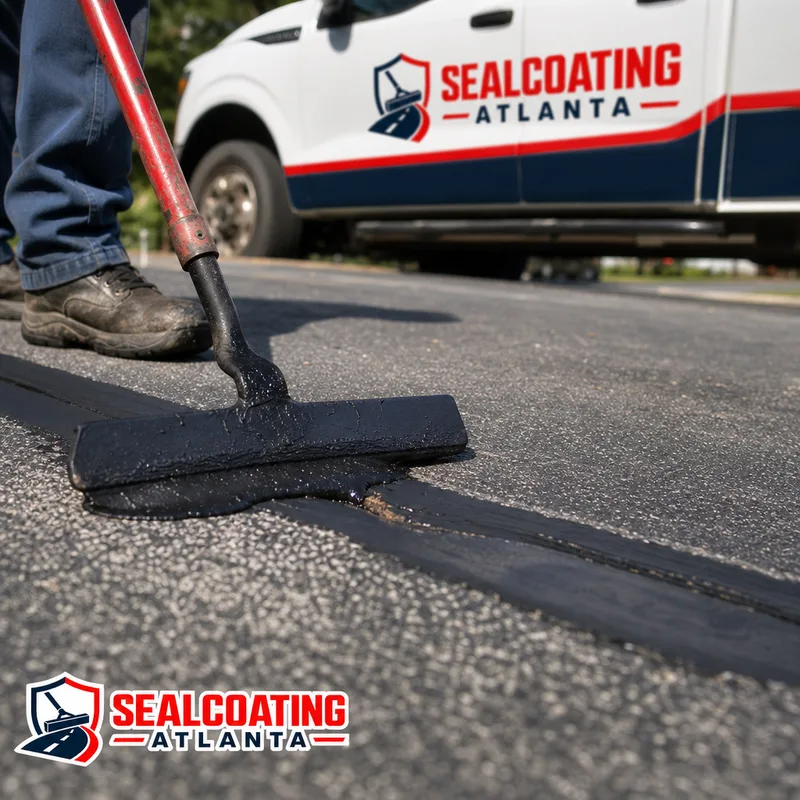
Our asphalt crack repair Atlanta service focuses on stopping that progression early. We clean and prepare the crack, fill it with a compatible rubberized crack filler or sealant, and finish the surface so tires and plows do not peel the repair back out. The goal is simple: reduce water intrusion, limit freeze-thaw damage during cold snaps, and slow down oxidation at the crack edges so your pavement lasts longer.
You will usually get the best results when cracks are addressed before they become wide, broken edges or potholes. If the asphalt around the crack is already crumbling, we will tell you what is realistic and what should be patched separately. The right fix depends on crack type, traffic load, and the condition of the surrounding pavement.
Straight cracks that run with or across traffic lanes. These are common in lots and drive aisles and respond well to proper crack filling and sealing when edges are still intact.
Web-like cracking caused by base failure or repeated heavy loads. Crack sealing can help short-term, but areas with fatigue cracking often need patching to restore structure.
Cracks near pavement edges where support is weaker. We prioritize cleaning and sealing to keep water from undermining the edge and creating breakouts.
Cracks that form along seams or previous saw cuts. Correct sealant placement reduces water entry and helps prevent raveling along the joint.
Residential driveway cracks caused by age, drainage, or minor settling. Driveway crack filling Atlanta work is often about keeping water out and maintaining a clean look.
Good results come from prep and the right material choice, not just smearing product over an opening.
For most pavement crack repair Atlanta projects, we start by clearing vegetation and debris, then blow out the crack with high-powered air. If the crack has built-up dirt or loose edges, we may use wire brushing or routing to create a clean reservoir so sealant can bond and flex with temperature changes.
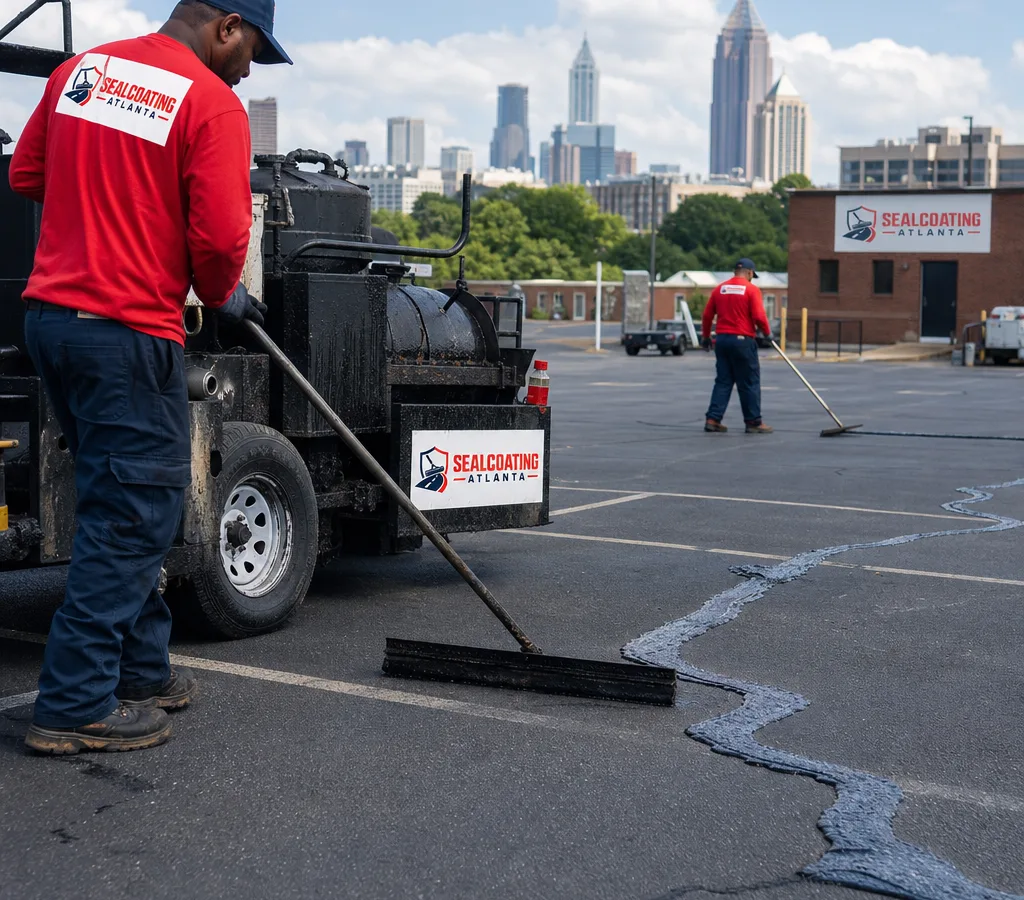
Next, we select a material that matches the crack and the use of the pavement. Hot-applied rubberized crack sealant is often the go-to for active cracks in parking lots because it stays flexible. For smaller, less active driveway cracks, a cold-applied crack filler may be appropriate when conditions and crack width allow.
Finally, we band or squeegee where needed to protect the crack edges and reduce tracking. We also pay attention to drainage patterns. If water is constantly crossing the cracked area, we will point that out, because no asphalt crack sealing Atlanta work lasts as long when water is being funneled into the same spot after every storm.
If you are planning a full protective coat after repairs, the timing and cure conditions matter. Many properties schedule crack repair first, then follow with asphalt sealing in Atlanta once the filled cracks and weather conditions are right.
We look at crack types, widths, and how traffic moves through the area. On commercial properties, we identify high-wear zones like entrances, loading paths, and tight turning radii.
We remove loose material, blow out dust, and get the crack dry and ready to bond. Prep is the difference between a repair that stays in place and one that pulls out.
We apply the right product for the crack behavior and pavement use. Parking lot crack filling Atlanta work commonly uses hot-applied sealant for flexibility under vehicle load.
We coordinate re-opening based on material set time and ambient conditions. For busy lots, we can often stage work to keep access available.
We confirm adhesion and coverage, then share practical guidance on monitoring, touch-ups, and whether any areas should be patched later due to underlying base issues.
Asphalt crack repair in Atlanta typically ranges from about $250 to $1,500+ for small to mid-size jobs, with larger parking lots and heavy crack volume priced higher. A small driveway crack filling project is often on the lower end, while parking lot crack repair with routing, extensive prep, and traffic control runs more.
Your final price depends on crack length and width, crack type (active vs. failed edges), cleaning and routing needs, material choice (hot vs. cold applied), access, and scheduling constraints. Exact pricing is confirmed after an on-site evaluation of the pavement condition.
Crack sealing uses a flexible rubberized sealant (often hot-applied) designed to move with working cracks, while crack filling is typically a less elastic material used for smaller, more stable cracks. For parking lots with temperature-driven movement and heavier traffic, crack sealing Atlanta work is often the better long-term choice when the pavement is a good candidate.
Mild, dry weather is ideal because cracks need to be clean and dry for proper bonding and cure. In Atlanta, many property owners schedule repairs during stretches without rain so water is not trapped in cracks and so the sealant can set correctly.
Yes, many parking lot crack repair Atlanta projects can be staged by working in sections and keeping key entrances open. The right plan depends on the layout, tenant traffic, and cure time needed for the material used.
Yes, we provide driveway crack repair Atlanta service for common linear and random cracks where the surrounding asphalt is still sound. If sections are breaking apart or sinking, we will recommend patching those areas first so crack filling is not used as a structural fix.
Crack sealing helps reduce the water intrusion that often leads to potholes, so it can slow down pothole formation when done early. If the base under the asphalt is already failing, sealing alone cannot restore strength, and patching may be needed in those spots.
Most crack sealants need time to set before traffic returns, and the timing depends on temperature, sun exposure, and the material used. We provide clear re-opening guidance on site so you can plan around tenants, customers, or household schedules.
Yes. Our crew works with commercial properties and residential owners across Atlanta, and our shop is based at 587 Whitehall St SW, Suite 5, Atlanta, GA 30303, which helps with scheduling for lots and driveways around the urban core.
Tell us whether the surface is a parking lot or driveway, where the worst cracking is, and any access constraints. Sealcoating Atlanta will confirm the right crack filling or crack sealing approach, timing, and what to handle first for the best life out of your asphalt.