✓
Square edges and stable boundaries
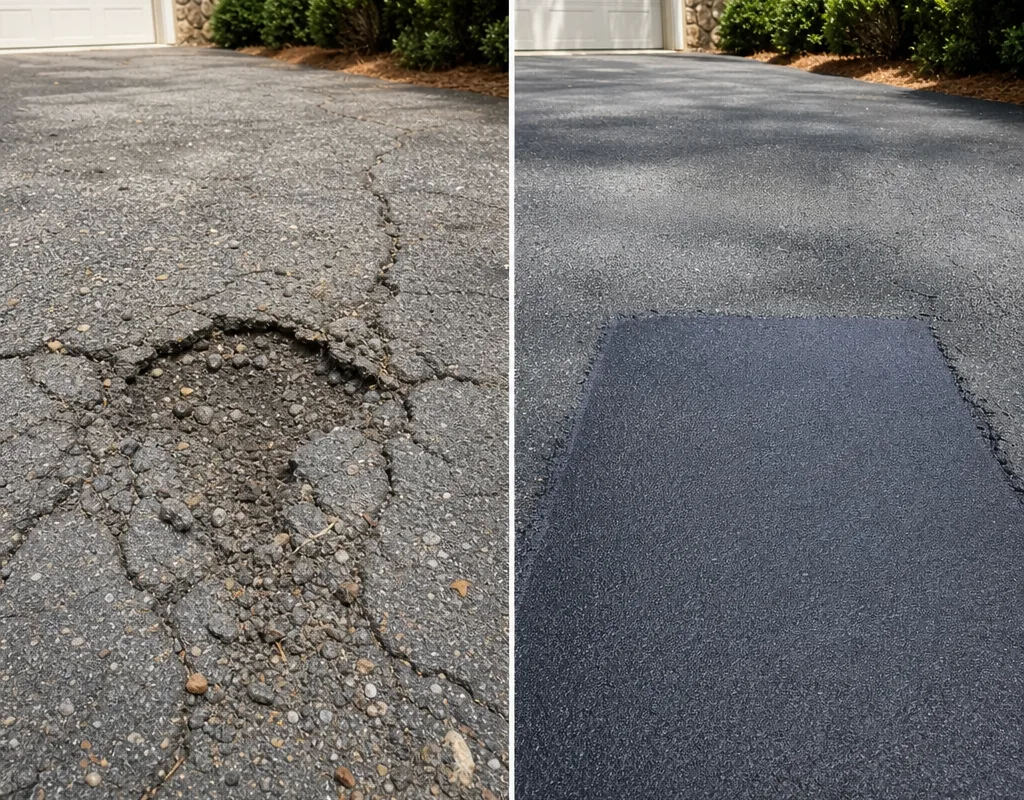
A patch holds better when the repair area is clearly defined, the edges are sound, and the new asphalt bonds to a clean perimeter.
Serving Atlanta, Georgia & surrounding areas
Mon–Fri 8am–6pm · Sat 9am–2pm
Fix cracks, potholes, and failing edges before water and traffic turn small damage into a full replacement. Get a clear scope, the right repair method, and a surface you can trust again.
When asphalt starts to break down, the fastest way to lose the whole surface is to ignore the first signs. Driveway repair Atlanta property owners schedule most often starts with hairline cracking, low spots that hold water, and soft edges where vehicles roll off the pavement.
In Atlanta, those issues usually get worse because water works into cracks during heavy rains, then the base below the asphalt starts to pump and move under traffic. Summer heat also softens asphalt, which makes ruts and scuffing more likely where cars turn in place. The right repair is the one that stops water intrusion and restores support, not the one that only hides the damage.
Sealcoating Atlanta handles asphalt repair and pavement maintenance for residential driveways and light commercial areas. Our shop is at 587 Whitehall St SW, Suite 5, Atlanta, GA 30303, which keeps us close to the older in-town streets where pavement sees a lot of turning, braking, and delivery traffic. If you are already seeing loose gravel, a spreading crack pattern, or a pothole starting to open, it is a good time to get it evaluated and stabilized.
Good asphalt patching starts with one question: is the asphalt failing at the surface, or is the base underneath failing too? That decision changes the prep work and how long the repair holds.
Common driveway and blacktop repair work we do includes:
We will walk the driveway, look for drainage issues, and check where the asphalt is sound versus where it is soft. In neighborhoods like East Atlanta and Grant Park, driveways often include tight turns and sloped approaches, so scuffing and edge stress are common. In areas with more tree canopy like Buckhead, roots and shaded moisture can contribute to heaving, soft spots, and moss at the edge. In Midtown, lighter-duty asphalt around small lots and alleys can show fast wear where delivery vehicles repeatedly turn.
If your repair plan also includes sealing after the patches cure, you can compare timing and expectations for sealcoating in Atlanta so the surface is protected once the structure is back in shape.
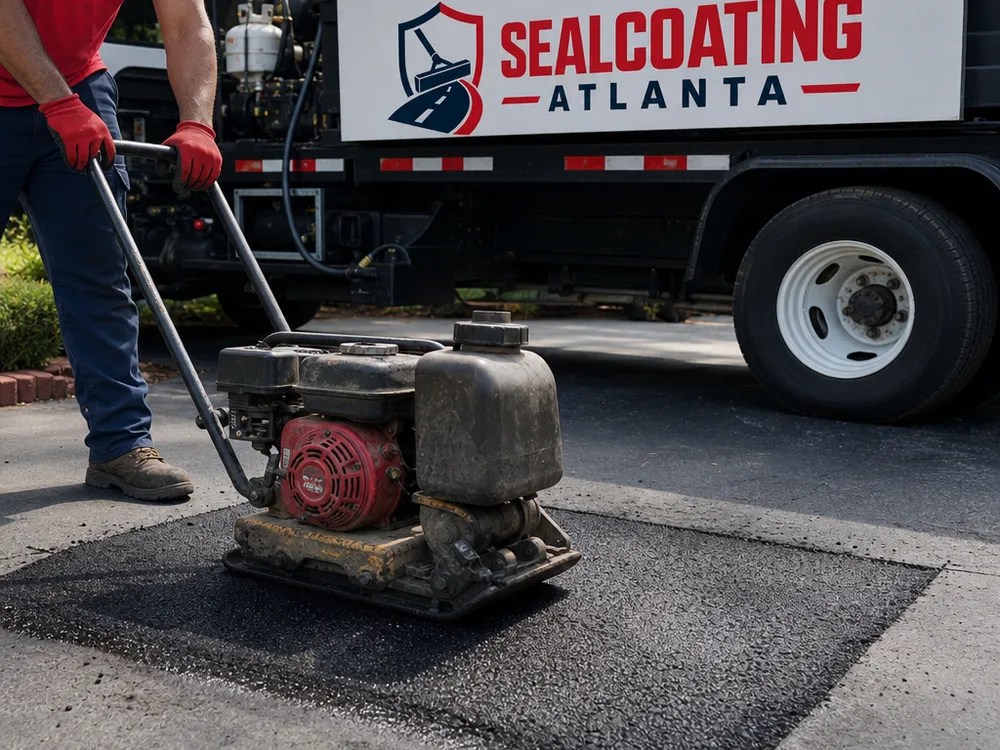
A patch holds better when the repair area is clearly defined, the edges are sound, and the new asphalt bonds to a clean perimeter.
If the sub-base is soft or pumping, we fix the support first. Asphalt placed over a failing base usually cracks back quickly.
Hot mix asphalt needs proper depth and compaction. Thin, loosely compacted patches tend to ravel and dish out.
We look for low spots, downspout discharge, and runoff paths. Keeping water moving away from the pavement protects the repair.
Turning zones, aprons, and parking areas see different stress than straight runs. The repair area should cover the whole distressed zone, not only the visible hole.
You should know what is being removed, how deep the patch goes, what gets compacted, and what the surface will look like when it is finished.
We inspect the damage, check for soft areas, and look at drainage. For parking lot repair in Atlanta, we also note where turning traffic and loading zones are causing concentrated wear.
We remove loose and broken asphalt and create clean edges. If the base is contaminated with fines or water, we excavate to stable material.
Where needed, we add and compact base material to restore support and grade. This step is what prevents the same failure from returning.
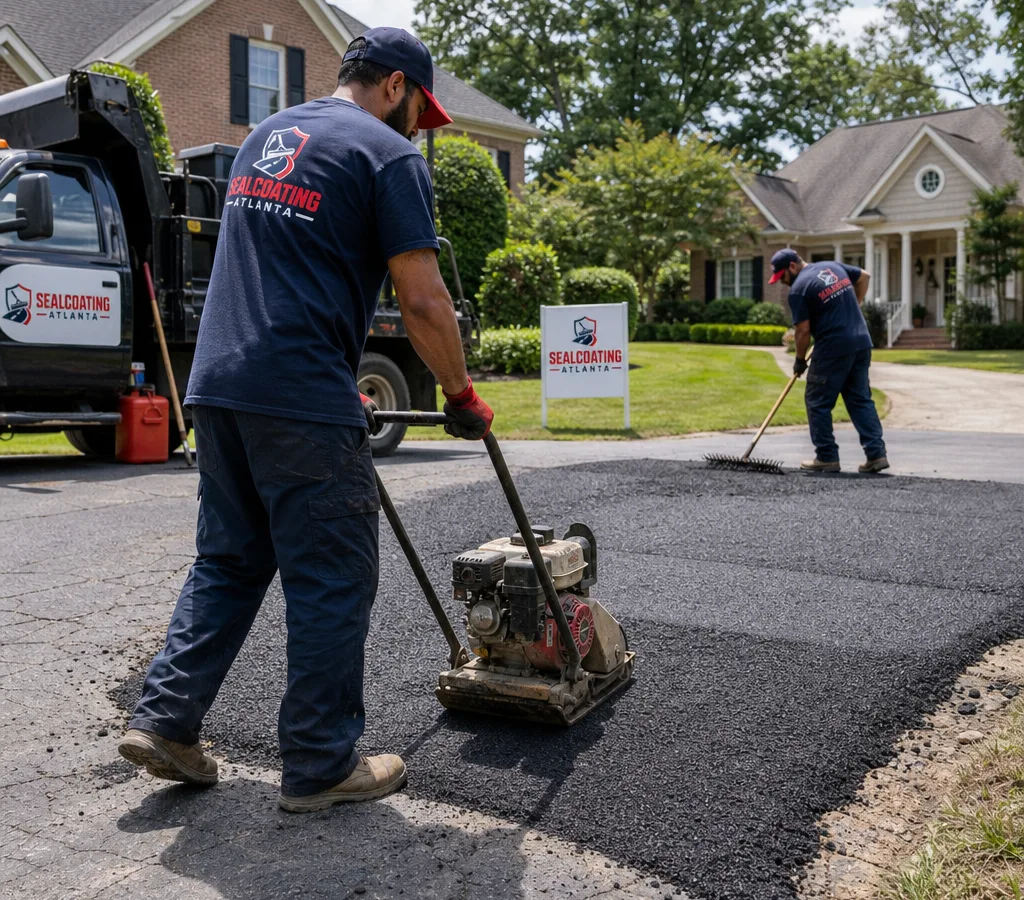
We install asphalt to the correct thickness, compact it to a tight finish, and feather edges where appropriate to reduce trip points and tire stress.
We confirm transitions, drainage, and surface smoothness. If the surrounding pavement is oxidized or cracked, we will recommend an asphalt maintenance plan that fits the condition and budget.
Driveway repair in Atlanta typically ranges from about $300 to $1,500+ for smaller patching work, while larger areas with base rebuilding can run $2,000 to $6,000+. A single pothole repair might fall in the low hundreds, and multiple distressed areas or a failing apron often pushes the total higher.
Your final price depends on how much asphalt must be removed, whether the base needs rebuilding, the thickness required, access for equipment, and how much grading is needed to fix drainage. The exact cost is confirmed after an on-site inspection and a written scope.
If your driveway is cracking, breaking at the edges, or starting to form potholes, get a repair plan now so water does not keep working into the base through the next storm cycle.
Book Your Free InspectionIf the damage is localized and the surrounding asphalt is still structurally sound, asphalt patching is usually the right fix; widespread alligator cracking, repeated potholes in multiple areas, or major base failure across the whole driveway can point toward replacement. A quick check is whether the pavement feels soft or pumps water and fines when stepped on after rain, which often indicates base issues that need more than surface work.
The best pothole repair removes loose material, rebuilds any soft base, and compacts hot mix asphalt to the proper thickness. A cold patch thrown into a wet hole can work as a short-term stopgap, but it commonly loosens under turning tires and heavy rain, especially in low spots where water keeps returning.
Many driveway repairs can be completed in a single visit, but cure and cooling time depend on repair size and weather. In warm Atlanta conditions, hot mix often supports light traffic the same day after it cools and sets, while larger patches and rebuilt areas may need more time before heavy vehicles or sharp turning on the new mat.
Many cracks can be repaired if the asphalt around them is still stable and the crack is not caused by a failing base. Sealing or filling helps most when it is done before water gets into the pavement structure; once cracking turns into interconnected breakup, patching or full-depth repair is usually more reliable than crack fill alone.
Yes. Parking lot repair often focuses on high-stress areas like entrances, turning lanes, loading zones, and dumpster pads, where the pavement sees concentrated weight and pivoting. The same fundamentals apply: correct removal, stable base, proper hot mix placement, and attention to drainage so the repaired sections do not fail early.
Pavement maintenance typically includes monitoring and sealing cracks early, keeping drainage paths clear so water does not pond, and protecting the surface once repairs have cured. Maintenance timing depends on asphalt condition and exposure, but the goal stays the same: keep water and oxidation from opening the surface back up around repaired areas.
Tell us what you are seeing, and we will confirm the cause, recommend the repair method that fits the condition, and provide a written scope for driveway repair in Atlanta.