✓
A real look at base and drainage
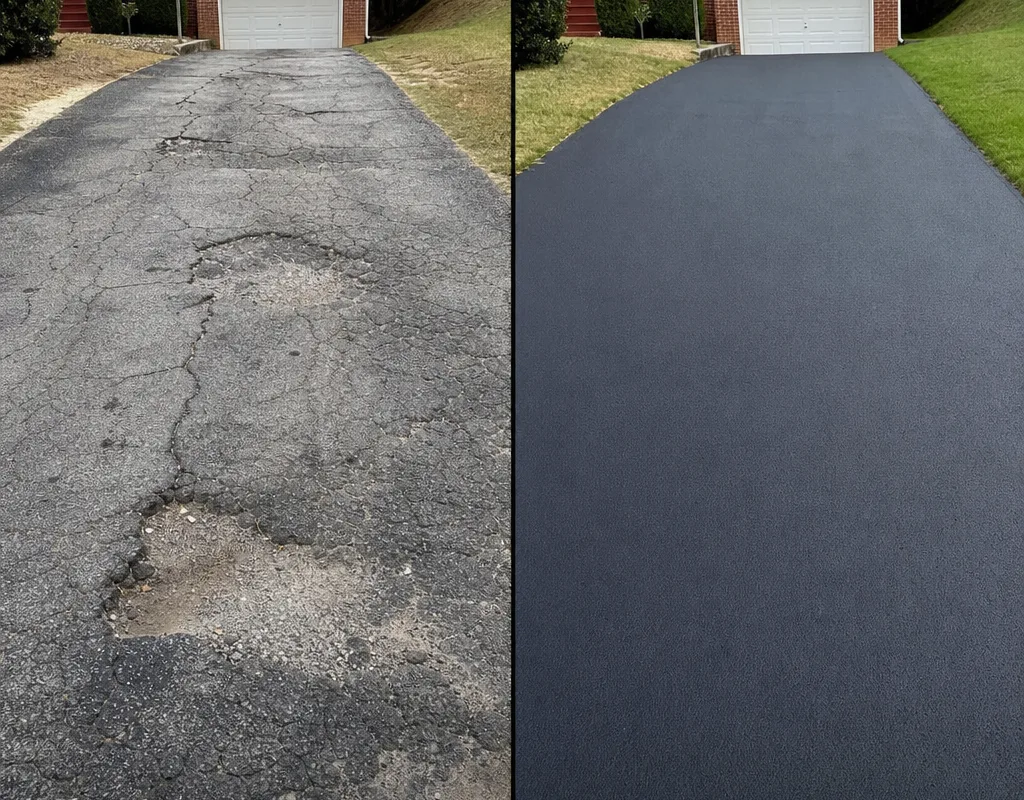
Cracking and raveling often start below the surface. We check soft areas, ponding locations, and edge support before recommending asphalt paving in Atlanta.
Serving Atlanta, Georgia & surrounding areas
Mon–Fri 8am–6pm · Sat 9am–2pm
Get asphalt paving that drains right, compacts right, and holds up to Atlanta heat and traffic. Clear scheduling, clean edges, and a written scope before work starts.
Atlanta paving for lots, driveways, and private roads
If you are searching for a paving company Atlanta GA property owners can rely on, you are usually trying to solve one of three problems: rough pavement, standing water, or a surface that is breaking apart faster than it should. Good results come from the parts you cannot see after the job is done, like base condition, drainage, and compaction.
Sealcoating Atlanta provides Atlanta paving for residential and commercial surfaces across the metro, including:
Atlanta asphalt takes a beating. Summer heat softens binder, heavy rain finds weak spots, and turning traffic scrubs the surface at corners and entrances. The right plan—and the right prep—matters more than rushing to place mix.
Cracking and raveling often start below the surface. We check soft areas, ponding locations, and edge support before recommending asphalt paving in Atlanta.
A driveway and a dumpster pad should not be built the same. We match asphalt section and base work to the traffic load, turning movements, and subgrade condition.
Most early failures show up at edges, tie-ins, and utility cuts. We plan grade transitions, install proper edge support where needed, and leave crisp lines.
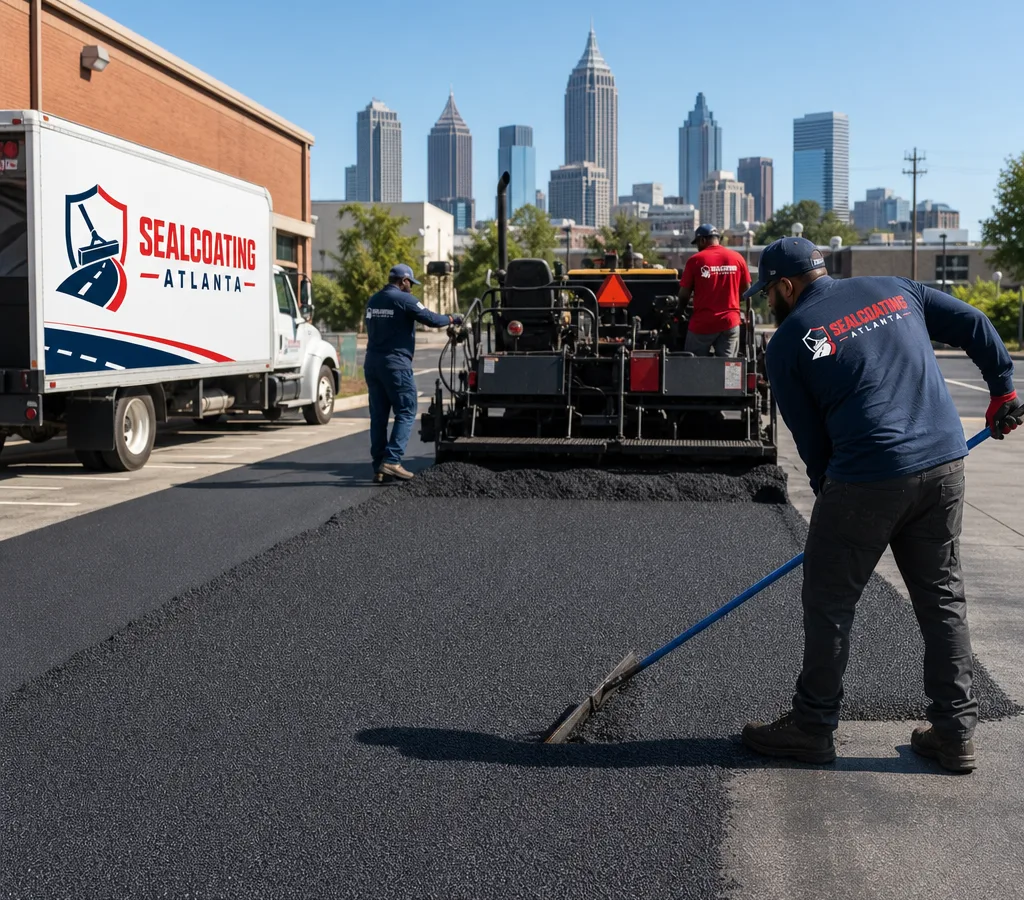
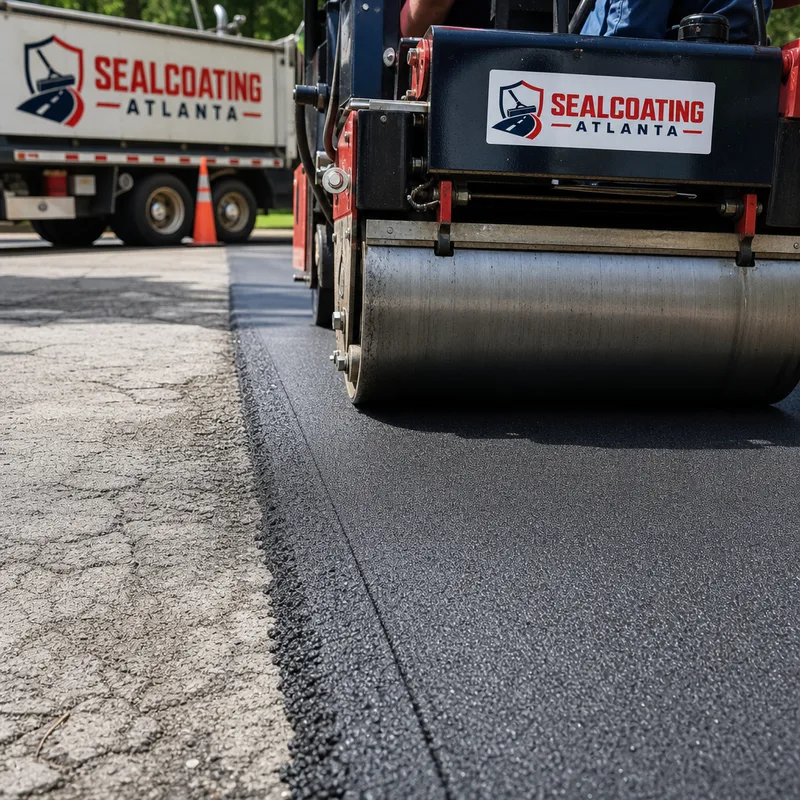
Rolling is where asphalt becomes pavement. We roll in the right temperature window to hit density and reduce future rutting and water intrusion.
For businesses, the goal is access and safety. We coordinate phasing, staging, and striping timing so customers and deliveries can keep moving.
A smooth black surface can hide problems if the structure underneath is wrong. When clients compare Atlanta asphalt paving bids, the biggest differences are usually in what is included for prep and how the contractor handles water.
Base and subgrade: If the existing base is contaminated with soil or has pumping soft spots, overlaying with new asphalt can fail quickly. In those areas we typically recommend excavation and base rebuild, then paving.
Drainage and grade: In Atlanta, heavy rain events make slope and inlets non-negotiable. We look for low spots, negative pitch near buildings, and areas where water sits after storms. Sometimes the right fix is regrading, adjusting an inlet rim, or adding a small trench drain before new asphalt goes down.
Joints and tie-ins: Where new asphalt meets old asphalt or concrete, we plan straight sawcut edges and tight joints. That is where water likes to enter first.
If your surface is structurally sound but weathered, protecting it after paving matters too. Many property owners pair paving work with sealcoating in Atlanta once the asphalt has cured and the site is ready for a maintenance cycle.
We walk the pavement with you, note distress patterns, measure areas, and identify drainage issues, access limits, and staging needs.
You get a written scope listing patching, removal, grading, base work, and paving thickness. For lots, we also plan traffic control and phases.
Failed asphalt gets sawcut and removed. Soft subgrade areas are corrected, base is compacted, and grades are set to move water properly.
Hot mix asphalt is placed, leveled, and rolled in sequence, with attention to corners, entrances, and edges.
We clean edges, confirm transitions, and review cure and access timing. If striping is included, we coordinate its layout and schedule.
Asphalt paving in Atlanta typically ranges from about $4 to $10+ per square foot, with small driveways often landing around $3,500 to $10,000+ and larger parking lots commonly priced by square footage and phasing. Heavier-duty areas, like truck routes and dumpster pads, cost more because they require thicker asphalt and stronger base work.
Your final price depends on demolition and haul-off, base condition, thickness, drainage corrections, access for equipment, and how much patching or grading is needed. Exact pricing is confirmed after an on-site inspection and measured scope.
“They explained why our lot was holding water at the entrance and wrote the fix into the scope. The finished grade drains like it should, and the edges are clean.
“Our driveway replacement was scheduled clearly, the crew kept the area tidy, and the transitions to the garage and sidewalk look sharp.”
“We needed patching and a new lift in phases so tenants could park. The staging plan made it manageable, and the surface came out smooth.”
An overlay can work when the base is stable and the existing pavement is not failing structurally, but widespread alligator cracking, pumping soft spots, or chronic ponding usually point to removal and base repair. In Atlanta, heavy rain can expose weak drainage quickly, so we look at slope and low spots as closely as the cracking pattern before recommending an overlay.
Most passenger vehicles can use new asphalt after it cools and sets, often later the same day, but tight turns, heavy loads, and kickstands can mark fresh pavement for longer. For commercial lots, we plan phasing so access stays open while protecting new areas during cure and early use.
Thickness depends on the base and expected loads, but driveways typically need less asphalt than areas that see delivery trucks, turning traffic, or dumpsters. A good paving contractor will specify asphalt thickness and base work together, because thickness alone cannot compensate for a weak base.
Yes. We pave to proper grades at inlets, set clean tie-ins to concrete, and use straight sawcuts where removal is required. Utilities and structures are exactly where cracking and water intrusion start, so we pay close attention to compaction and joints in those areas.
Ponding usually comes from settled base, low spots from prior patches, or grades that were never set to drain to an inlet or edge. With Atlanta downpours, small dips turn into standing water fast, so correcting grade during prep, not after paving, is the right time to fix it.
Many projects include both, especially for businesses that need clear stall layout and safe access during work. If striping is part of your scope, we schedule it after the asphalt is ready and coordinate phases so customers, tenants, or deliveries can move through the property safely.
Tell us what you are paving, how the area is used, and any drainage or failure spots you have noticed. We will inspect the surface, outline options, and provide a written scope with straightforward scheduling.